The New Year is here. Are you making resolutions to change your bad habits into healthy habits? What’s your record on resolutions? If you want to make changes that produce lasting results, then listen up! Today I am introducing you to the six stages of change and how applying the six stages of change can help you fulfill your New Year’s resolutions. Then, it is up to you to make powerful resolutions that give you what you want.
What Does Change Have to Do with Resolutions?
You make a resolution to effect a change in life either by doing something new or by discontinuing something as it is usually done. “I’m going to get into shape!” or “I’m going to quit drinking.” Knowing the six stages of change, you may consciously apply them methodically when you make your resolutions and throughout the year as you fulfill on your resolutions.
Where Do the Six Stages of Change Come From?
Psychologist James Prochaska distinguishes the six stages of change in his book, Changing For Good. This is the product of his study of smokers who successfully quit and those who attempt to quit, and relapse. The stages of change apply to any implementation of change. The change may be to quit smoking, to get into shape, to have a customer adopt your product, or to implement a new business process in your department.
How Do the Stages of Change Work?
Relapse is when an attempt is made at change and the condition returns to as it was before the attempt at change. The key to effect lasting change is to complete each of the stages, in sequence.
What are the 6 Stages of Change?
Join me on my journey through developing a consistent yoga practice.
Stage 1 – Pre-Contemplation
In the pre-contemplation stage, you might just have an idea of making a change. You are talking about it, but not seriously contemplating. I start with the thought that I want to improve my joint health and have a new exercise routine. In this stage I have not yet created the target of having a yoga practice. Stage 1 is a stage of ideas. When I choose a yoga practice as a tangible and actionable change to implement, the pre-contemplation stage is complete and I’m ready to move on to …
Stage 2 – Contemplation
I contemplate a yoga practice. What will it take to keep me going? What can take me out and have me relapse? Is there enough fun to keep me motivated? What might I like and dislike about it? I want to have it convenient because I know I have a busy schedule. What kinds of yoga are available? How will it impact my daily routine and my time with my wife? The contemplation stage is a time of reflection and information gathering. When I understand major opportunities, hurdles, and impacts of the change I am contemplating, I am complete with stage 2 and ready for …
Stage 3 – Planning
Having contemplated what it means to my life to have a consistent yoga practice, I know what planning there is to do. There is a hot yoga class 8 blocks away at 6:00 AM. Practicing with others motivates me. My wife is up early, so I have support in waking early. I try a class. I can go to yoga, shower, and get to work before 9:00 AM.
Planning is information intensive and involves communication with others who will support you or be impacted by your change. My planning is complete. I’m ready for …
Stage 4 – Action
Not until planning is complete am I ready for action. Bring to mind a time you’ve seen action without sufficient contemplation and planning? How effective and lasting is action that is ill conceived?
I sign up for monthly auto-pay for yoga. As I begin going to yoga, I am fully supported. I get to the studio at 5:40, relaxed and a bit sleepy. I have what I need and without worry or stress.
Stage 5 – Maintenance
Taking action is just one stage in implementing effective change. The stage of maintenance keeps relapse at bay. I have much to do to keep my practice going: looking forward to seeing my new morning yoga buddies, having functional mat and clothes I like, practicing when I’m away on vacation.
After two years, I am maintaining a consistent yoga practice averaging more than three classes per week.
Stage 6 – Termination
Depending on the change, termination might never come. If there ever comes a time when my habit is to pull out a yoga mat for 60 minutes, class or no class, home or away, this is the time for termination of the efforts and structures of maintenance. When the desired change is a permanent part of life, the termination stage is appropriate. When the smoker finds a cigarette is not tempting, but revolting, then there is no need for maintenance, change is permanent.
In Summary
As you create resolutions for a positive change in your life, I invite you to employ the structure of the stages of change:
- Pre-contemplate and select a resolution that is specific, actionable, and fulfilling.
- Contemplate what it will take to fulfill and the hurdles you must surmount.
- Plan the structures that will overcome obstacles and sustain you on your journey.
- Take the action consistent with your planning to put change into place.
- Maintain the structures of change as long as there is any risk of relapse.
- Terminate your supporting structures only when the change you resolved is your only way of life!
Happy New Year!
David Lazaroff is author of Little Book of Big Love – 50 Ways to Express and Acknowledge Love With Words. David gives workshops and private coaching on finding and cultivating loving relationships.

 You’re in pain, you put your back out, so you go to a chiropractor. Some chiropractors adjust the spine and other joints to relieve your pain. The pain goes away, you stop going. When the pain returns, you go back for more adjustments.
 The previous paragraph was the opening of my speech at the division level Toastmasters International Speech Contest in May 2012. On that May evening, as I spoke those words the presentation was going well. I got a laugh where I was supposed to and I felt a connection with the audience. The speech went on and I continued to have good audience reaction. I felt excited and exhilarated.
 The police and EMTs arrive on the scene along with the fire department tearing up the car with the Jaws of life. The ambulance comes and takes them away. There is the scene at the hospital where parents break down after they are informed that their children have died, and others are told of severe injuries and paralysis.
 In a similar way, anyone who has experienced a major depression (which seems like it should be more accessible to our thinking than an inflamed gallbladder) can tell you that feeling better is not a matter of merely sitting down and deciding to feel “happier.” It doesn’t work like that. So no, we can’t really influence our health with our consciousness, but we can.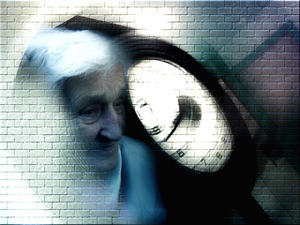

 The solution resides in our neighborhoods and families. Keep in mind that you have a place in these statistics! The one-in-eight mentioned who will develop Alzheimer’s includes your parents, your siblings, your friends, your neighbors, and YOU! Are you the one diagnosed or among the seven friends and family members?
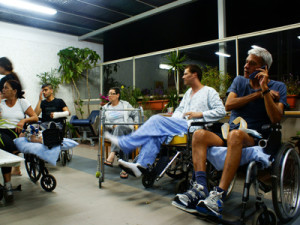 Caring for others is not a burden and distraction from the opportunities of life. Caring for others, and being cared for, is the POINT of life. Yes, I am revealing to you the meaning of life! Remember that when we share the load, we can carry any weight. When we share the work, we can build a structure of any size or a road of any length. To ignore life’s opportunity to live and complete life in community is to be ignorant of the source of joy and happiness in the world.
 Sadness, fear, and challenges are very real experiences. These experiences distract us from the joys of life and it is critical to the happiness of everyone to complete them and move through them appropriately and NOT GET STUCK. We see supporting examples of this in many cultures around rituals and practices of burial and grieving. There is an appropriate (although not precisely fixed) time for grief and an appropriate time to move beyond grief.
 So, at that time of fear I look for what is joyful: Carl is my friend. He trusts me to care for him. Making sure he is clean and comfortable is one way to express my love for him and give him a good life. When I help him use the toilet at a concert hall, we can comfortably get back to our seats and enjoy the music. When I help him in the family restroom at the stadium, we can get back to enjoying the ball game in comfort.
 In a blink of time we are born, live our lives, and are gone. There is always one part of the body that malfunctions first. With Alzheimer’s it is the brain. Some people live only minutes, others hours, others years, and some live for decades. Very few live more than a century.
 Find joy in this world, my friend. Find joy in trees, in animals, in the wind, and in the sea. Find joy in the eyes of your family, in their breath, and in their heartbeats. Search for joy in no moment other than the present. Long for no past or future. The promise of life is here and now and it is beautiful! In a hundred years we remain in the love we live today.