I assert that love, joy, and companionship are the fundamental requirements of Alzheimer’s care. Any other care that may be regulated and enforced to ensure physical health and safety should be delivered in the context of ensuring the presence of love, joy, and compassion. If the delivery of food, shelter, medicine, hygiene, and other physical care is made in the absence of love, joy, and companionship in the experience of the receiver, then the delivery is inadequate.
 Physical suffering is obvious to a third party and therefore easy to regulate and intervene upon by an observer. Mental and emotional health are less obvious and require much more attention to discern and attend to. Spiritual health is still more subtle. The cultivation of understanding of the mental and emotional health of another person is accomplished in the context of personal relationships over time. Particularly skillful and sensitive persons can sometimes gain insights to the joy and suffering of an individual quickly, but time and relationship must be respected as the primary sources of authority. Spouses, family members, and carers with long-standing relationships and observable commitment to a person being cared for can create a mentally and emotionally safe environment that overrides some apparent physical hazards or threats.
In situations where the person being cared for has dementia, great considerations must be addressed when removing a person from their mentally and emotionally safe environment to provide a more physically safe environment. If the provision of a physically safer environment causes enduring mental and emotional misery, a great assault on the person’s humanity is committed. The person with dementia is often unconcerned and unaware of their physical condition and their world perception is in the mental and emotional realm. With Alzheimer’s related dementia present, Maslow’s hierarchy is askew and the sense of love and belonging is a more basic need than physical safety. In this context, without love and belonging, a physically sustaining environment is a prison of loneliness, sorrow, and grief with no hope for parole.
 An article on Chill4Us.com explores the question “What good is it making someone safer if it merely makes them miserable?” as a legal inquiry. The crux of the problem is in the headline, which implies that misery is unrelated to safety. This is a false premise. Misery is a threat to the safety of basic measures of health of the human condition: peace, love, and a sense of belonging. To introduce misery is to threaten these securities. Misery is an unsafe condition.
In the physical human form we experience the mental, emotional, and spiritual worlds through the relationships we develop with others and the physical world. The only proper context for physical care is in support of a JOYFUL mental, emotional, and spiritual experience.
David
David Lazaroff is author of Live It Up! 10 Ways to Share Joy When Your Friend Has Alzheimer’s. David coaches family and friends of people with Alzheimer’s Disease in creating a fun and joyful life. Contact david@holistic.com
David is the founder of Holistic Community Living, a Colorado nonprofit founded to operate and teach others to operate neighborhood-based assisted living homes where people can complete their lives with those they love.
 Today has everything the world offers. Look no further for your next action or your next joy. The door to the world of joy is open today.
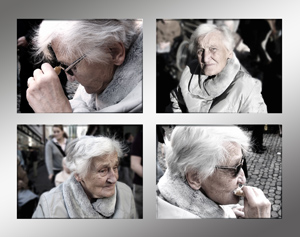 A disease is physical: “an impairment of the … body or one of its parts.” If you look at the brain of a person with Alzheimer’s disease after their death, you find plaques on the brain that impair nominal functioning.
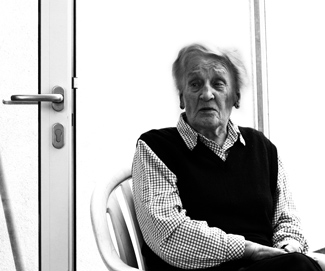 The job descriptions of caregivers do not say “friend”. So, don’t expect it. Their performance is not evaluated on their friendship. So, don’t expect it. The structures of the homes and the evaluation of performance of managers and administrators do not emphasize friendship. So, don’t expect it. That is unrealistic.
 Only when the joy, love, and companionship of those being cared for are the measures of effectiveness and success of caregivers, staff, and administrators will the opportunity for joyful living and a comforting completion of life be fully realized. When a caregiver is asked, “What do you do for a living?” they should be able to respond, “I love people.”
 When caregivers and those with Alzheimer’s are friends, they are watching out for each other. A friend does not miss an upset and can enter your world in a moment and hold your hand and lead you through any darkness into a smile. Love between friends is palpable. There is no loneliness in friendship. When you are with your friend and you are in your friendship, joy is available! Circumstances do not matter. A friend does not turn their back when you are in need. A friend has time. A friend listens closely to both verbal and non-verbal communication, knows what you like and what makes you laugh and uses that knowledge to lift your spirits. A friend delights in your presence, appreciates your every breath and tells you.
 Open your heart and let it be filled with this present. Open your hands and your arms and embrace only this present.
 I wish him, “Happy New Year!”, and Carl laughs. His head hangs low and he appears to not be listening. “Hey, Carl,” I call to him cheerfully. He raises his head toward me. His eye is gleaming. There is a deep sparkle from within. He is with me. I put on a New Year’s message video of our spiritual teacher, Gurumayi Chidvilasananda, a recording of New Year’s Day 2004, and sit on the couch beside him. Carl recognizes Gurumayi’s voice. He smiles and laughs in response to Gurumayi’s humor.
 “I love you, Carl. I am grateful for your friendship. I am grateful for all you teach me. All your kindness and lessons live in my heart and always will; even the lessons that I don’t understand fully today. I am grateful that Gurumayi and Baba Muktananda bring us together to be friends. You’re a very good friend.” Carl looks up at me. Our eyes meet. Our souls touch. We recognize that we are each other. Life is eternal.
 This is an example of attachment to something outside myself. I attach feelings of self worth and happiness to things, people, and circumstances external to myself. Do you do this too? If my wife is upset with me, I feel sad, detached, and worthless. My!, that’s extreme and rather silly! (Even though it is common.) Detaching my feelings from my circumstances, I see that it is MY dopamine, MY neurochemistry, and with a little effort, I can manage it with what I do, eat, think, and say. Suddenly I have a say in how I feel. I have a responsibility for creating my happiness, my joy, and my bliss! Are you taking that on for yourself?
 This morning I have some of my favorite distractions calling me. I have my music calling me. I have my meditation practice calling me. Reading, learning, blogging, etc. Honestly, no matter my choice, nobody dies. Do you recognize all the choices you have every minute? I look at all the expectations I put on my life yesterday and yesterdays before that. Those expectations I laid for myself really don’t matter as much as I thought when I created them. I’m a different person now.
 I invite you on a journey through the happiest year in your life. Are you with me? Now, let’s be clear what we are in for. This year will be the happiest, because you say so and because you are actively tuning-in to and responding to the joy life is offering you more than you have any other year. Truly, happiness and joy are around you as much as the air you breathe. Oh!, you didn’t notice the air you are breathing? Luckily your lungs know how to pluck the oxygen out and leave the nitrogen and other gasses for your exhale. You do that so effortlessly, so, you can think about other things… like how life is offering you joy every minute. Together, lets try and train our consciousness to pluck the joy from life around us at all times.